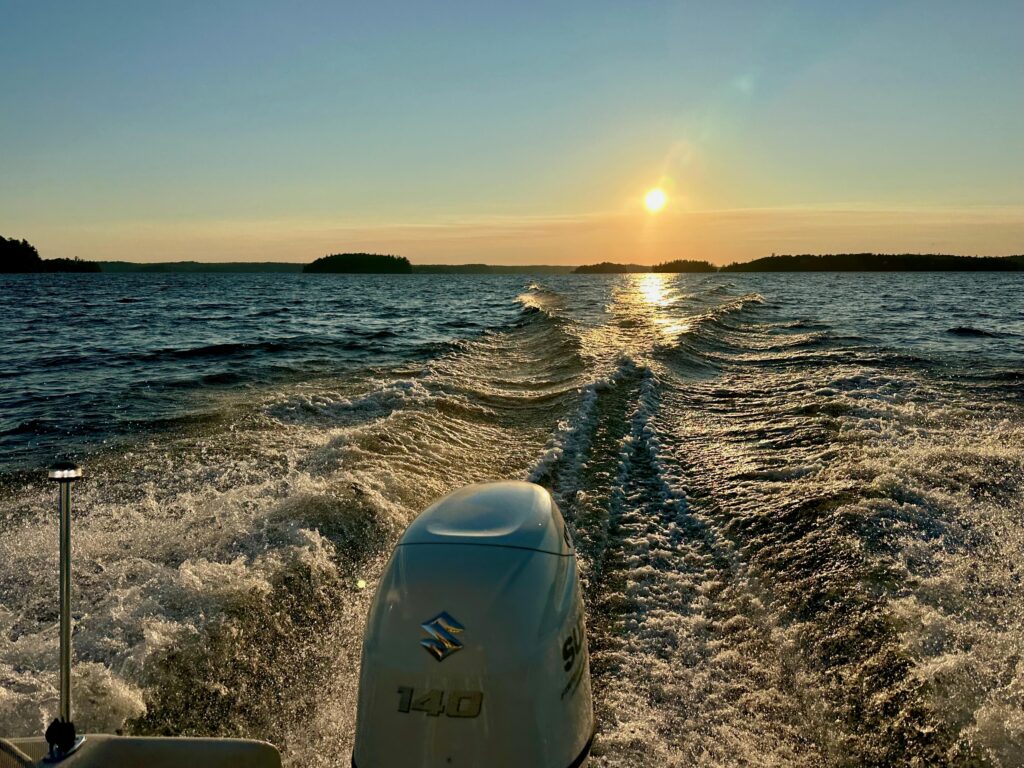
Big-water views on Lake Muskoka during a summer evening cruise
If you’re looking at Lake Muskoka cottages, you’re looking at the biggest, buzziest lake in the region – roughly 120–121 km² of water, up to about 73 m deep, with around 269 km of shoreline. It’s the central hub that ties together Gravenhurst to the southeast, Bala to the southwest, Bracebridge via the Muskoka River to the north, and Port Carling and the locks to Rosseau and Joe on the northwest.
It’s also the most “mixed” of the Big Three: busy boat corridors, quiet pockets, islands, heritage cottages, big new builds, family places, and resorts all layered together.
This guide is written for cottage owners and serious buyers, though there’s a lot here of interest to day-trippers too. We’re going to talk plainly about:
- Boat traffic and noise vs quiet pockets
- Lake Muskoka flooding and water levels
- Water quality, weeds and swimming
- Kid-friendly vs rough water and the most family-friendly areas on Lake Muskoka
- What you actually get for your money in different parts of the lake
Think of this as your “start here” Lake Muskoka guide. From here, we’ll link out to deeper dives on flood history, choosing a bay by vibe, and specific micro-areas like Mirror Lake and the north end.
If Lake Rosseau is the velvet rope, and Lake Joseph is the quiet billionaire club, Lake Muskoka is the big, buzzy living room of cottage country – everyone passes through, and a lot of people decide to stay.
TL;DR – Is Lake Muskoka Right for You?
Who usually loves Lake Muskoka
- Families who want a central, social lake
Easy boat or car runs to Gravenhurst, Bala, Port Carling and Bracebridge for groceries, markets, concerts, kids’ activities, hospital access and all the classic lake events. - People who like seeing boats and lights on the water
You enjoy energy on the lake – antique launches, wake boats, pontoons, steamships – not total wilderness silence. - Buyers who want more range than pure trophy lakes
You still expect to pay real Muskoka money, but you appreciate that Lake Muskoka offers older cottages, islands, “less polished” corners and prestige pockets all on the same lake. - Confident (or aspiring) boaters
You’re okay learning navigation, shoals and traffic patterns and teaching your kids to do the same.
Who often doesn’t love it
- People who want near-zero boat traffic and never want to hear a surf boat on a July afternoon.
- Buyers who are extremely risk-averse about water levels and aren’t interested in doing any homework on elevation, boathouses or flood history (psst… we handle all of this for you).
- Anyone whose dream cottage is a tiny, ultra-quiet back-lake with loons and almost no neighbours in sight.
High-level take
- Central hub lake: more activity, more marinas, more events, more services – and more mixed-in environmental and flooding realities than Rosseau/Joe.
- Historically more impacted by big flood years than its sister lakes – especially low-lying shoreline and boathouses in constricted areas like Bala Bay. Lake Muskoka is the last stop for water on the Big 3 before it leaves through the tiny exit in Bala. Think of it like a bathtub, and the Bala Falls are the drain plug.
- More choice in cottage types and vibes than you’ll get on the pure prestige sections of Rosseau/Joe.
Verdict:
If you want classic Muskoka energy, easy access to towns and you’re okay with some boat traffic and doing your homework on water levels, Lake Muskoka will probably end up on your shortlist.
If flooding is your main fear, scroll down to “Lake Muskoka Water Levels & Flooding” first.
Lake Muskoka at a Glance (Map, Size, Towns)
Quick facts
- Size: ~120–121 km², largest of the Big Three lakes
- Depth: max ~73 m, average ~18 m
- Shoreline: ~269 km (not counting every small island shoreline)
- Elevation: ~225 m above sea level
- Inflow: Muskoka River from Bracebridge; Lake Rosseau & Lake Joseph via the Indian River and Port Carling locks
- Outflow: Moon River at Bala, controlled by the Bala Falls dam
- Main towns on/linked to Lake Muskoka: Gravenhurst, Bala, Bracebridge and Port Carling

A sailboat on the north end of Lake Muskoka, looking toward the Bracebridge side.
How to picture Lake Muskoka
On a mental whiteboard, Lake Muskoka is a rough diamond:
- Southeast: Gravenhurst and Muskoka Bay
- Southwest: Bala and the Moon River outlet
- Northwest: Port Carling and the Indian River/locks to Rosseau and Joe
- Northeast: Bracebridge side and the Muskoka River mouth
A few quick mental landmarks:
- Big open “middle”: between Gravenhurst and Beaumaris/Mortimer’s Point – this is your classic big-water, long-fetch, wave-building corridor.
- Narrow, river-like arms: up toward Bracebridge and into the Indian River/Port Carling.
- Island clusters: Browning, Eilean Gowan, Keewaydin/Seven Sisters and others break up the lake into more sheltered pockets.
For most people coming from the GTA, Lake Muskoka is the first “big lake” they hit – usually arriving in Gravenhurst.
In simple terms: the east/southeast side feels more road-and-town connected; the west and central sections feel more “boat world.”
How Lake Muskoka Feels vs Lake Rosseau and Lake Joseph
If you’re weighing Lake Muskoka vs Lake Rosseau vs Lake Joseph, this is the big-picture comparison most buyers actually need.
Energy & vibe
Lake Muskoka:
The most mixed of the Big Three. You’ll see vintage wooden launches, wake boats, PWCs, pontoons, cruisers and steamships in the same afternoon. Busy corridors overlap with surprisingly quiet bays and islands. It’s very much a “working lake plus cottage lake” – resorts, marinas, local families, old estates and modest camps side-by-side.
Lakes Rosseau & Joseph:
Marketed more as pure prestige – more consistently high-end builds, tighter zoning in some pockets, and generally quieter, especially mid-week or in shoulder seasons.
Town access
Lake Muskoka arguably gives you the strongest town network in cottage country:
- Gravenhurst: full grocery, hardware, Muskoka Wharf, steamships
- Bala: Kee to Bala concerts, Don’s Bakery, Cranberry Festival, restaurants
- Bracebridge: hospital, big-box stores, Santa’s Village, services
- Port Carling: boutiques, restaurants and the “Hub of the Lakes” locks
You can reasonably boat to food, errands and entertainment in multiple directions, which is harder to pull off if you’re only on Rosseau or Joe.
Flooding & water levels
Recent major flood years for the Muskoka River watershed include 2013, 2017 and 2019, with 2019 setting new record highs on Lake Muskoka and the Moon River system. Because it’s the lowest of the Big Three and throttled at Bala, Lake Muskoka has taken more damage in big years than Rosseau/Joe, especially in low-lying areas.
We’ll dive into this in “Lake Muskoka Water Levels & Flooding” below – but if you buy here, water-level history is not optional homework.
Who each lake suits
Very simply:
Lake Muskoka:
People who want the heart of cottage country – multiple towns, lots to do, and a wide range of cottage types and locations.
Rosseau / Joseph:
Those willing to pay more for quieter, more curated prestige pockets, or who truly loathe traffic and want a calmer feel most of the time.
From a buyer-advice standpoint:
- If someone is easily stressed by boat wakes and crowds, we tend to point them to quieter lakes or quieter corners of Rosseau/Joe.
- If they get excited by markets, ski shows, steamships and boating to dinner, we usually say: “Lake Muskoka is exactly your speed.”
Lake Muskoka Market Insights
Thinking of buying or selling on Lake Muskoka? The 2025 season has shown a significant rebound in sales volume, though buyer selectivity remains high. For a deep dive into the latest sales data, inventory spikes, and pricing trends for this region, read our 2025 Muskoka Lakes Waterfront Market Report.
Lake Muskoka by Area – Bays, Corridors & Vibes for Cottage Buyers
This is where we get into the practical side of Lake Muskoka bays and communities and how they feel from a buyer’s point of view.
South End & Gravenhurst Corridor (Muskoka Bay, Lake Muskoka)
What it is
Muskoka Bay is the broad south basin, with Gravenhurst Wharf at the eastern end – home base of the steamships and a major first touchpoint for many people. Expect very active boat traffic: rentals, day-trippers, marina test drives, plus cottagers coming and going.
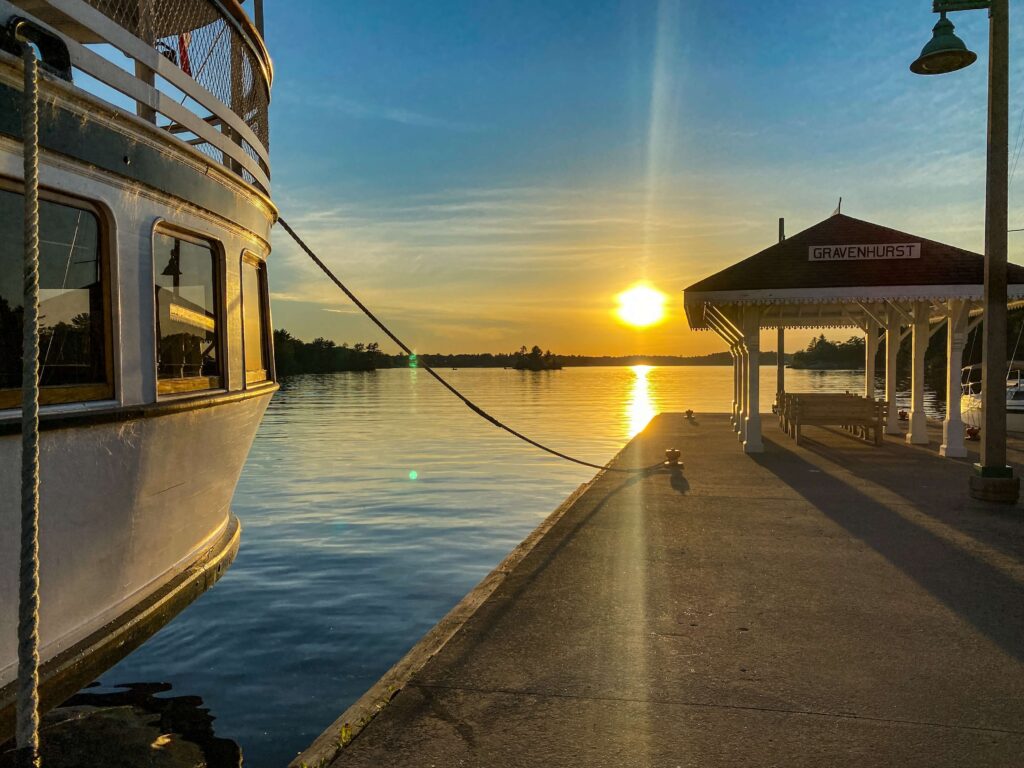
For many people, the Gravenhurst Wharf and steamship dock are their very first view of Lake Muskoka.
How the water feels
Back arms and shallow inlets can get weedy by late summer and pick up floating logs after storms. The open centre of the bay is deeper and choppier on windy days – true “big water.”
On shore
Taboo Resort, Muskoka Bay Club, marinas, public launch/parking and farmers’ markets make this convenience central.
Buyer framing
Pros
- Easiest access from Hwy 11 / 400 – you’re “in Muskoka” fast.
- Great if you like boating to dinner, hopping on a steamship cruise, or grabbing groceries by boat.
- Perfect for social, active families who want buzz and easy logistics.
Cons
- More boat wash, noise and night lights in peak season.
- Some sections are visually more “developed”: hardened shoreline, crowded docks, more weed growth in shallows.
If you buy here, you need to be okay with:
Seeing other boats constantly, learning the main channels, and accepting that sunny Saturday in August feels like a water highway.
Bala Bay & the Moon River Outlet (Flood + Fast Water Zone on Lake Muskoka)
What it is
Bala sits at the outlet where Lake Muskoka drains into the Moon River via Bala Falls and the control dams. In big years, water backs up here the hardest; 2019 shattered the previous 2013 high-water record on Lake Muskoka, and Bala Bay saw some of the worst impacts. Even in normal years, you feel more current and flow near the outlet.
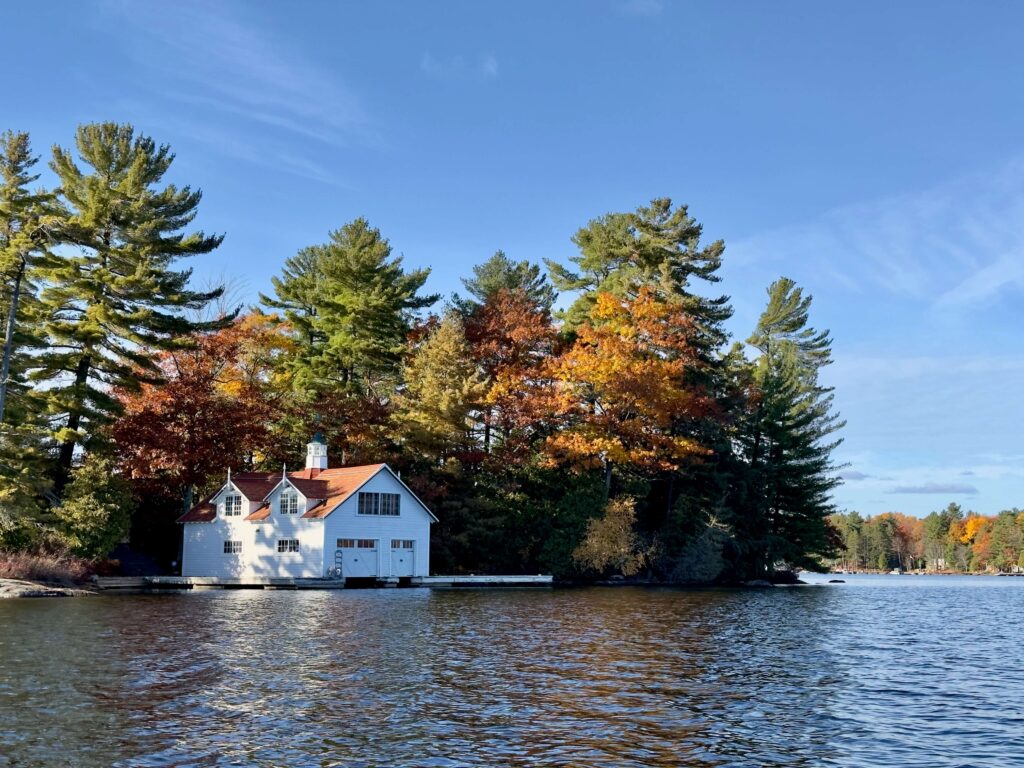
A historic boathouse on Stewarts Island near Bala, Lake Muskoka
Vibe
Iconic Bala: Kee to Bala concerts, Don’s Bakery, Cranberry Festival – plus a compact bay where a lot is happening in a small footprint.
Buyer framing
Pros
- Walk/boat access to restaurants, LCBO, bakery and live music – a real little town right there.
- Great for people who want energy and don’t mind being at the outflow of the system.
Cons
- You cannot be casual about flood risk and elevation here. Low boathouses and lots barely above typical high water are more exposed.
- More current and debris when water is high; you design docks and boathouses with that in mind.
On site, we’re looking at things like old water lines on cribbing, staining on boathouse posts, and what actually happened here in 2013 and 2019 – not just how it looks on a sunny July day.
Interested in learning more about the history of Stewarts Island, Lake Muskoka?
Central Lake Muskoka – Walker’s Point, Beaumaris & Mortimer’s Point
What it is
This is the postcard section of Lake Muskoka:
- Pink granite, windswept pines, big open water
- Heritage cottages and boathouses, plus the old-money Beaumaris “Millionaires’ Row” feel
- Walker’s Point: a long peninsula into the middle of the lake – lots of history, real community, marina and launch
- Mortimer’s Point and nearby Legacy Cottages: central, scenic and in demand
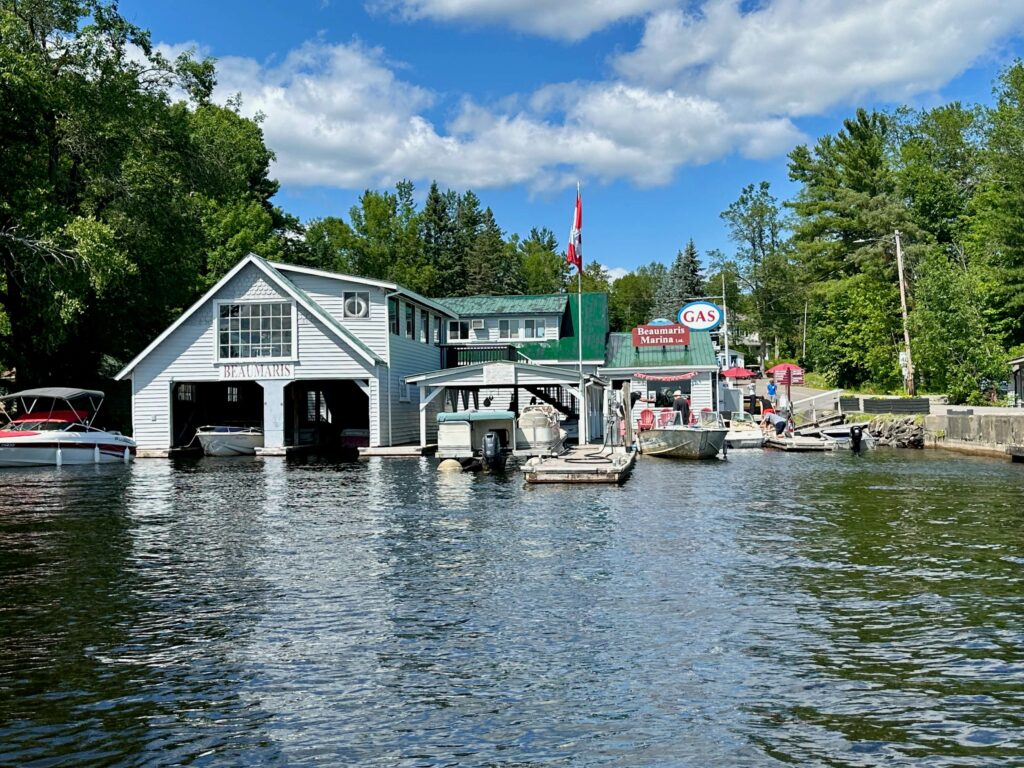
Beaumaris is classic central Lake Muskoka – visit Beaumaris Marina to fill up on gas and get the kids ice cream at Willmotts Store before touring the historic island properties by boat
Water & boating
The corridor from Bala → central → Beaumaris/Mortimer’s is where prevailing west/southwest winds build the biggest chop. On windy days, it can be whitecappy and rough for small boats. Boat traffic is steady in peak season – many main routes cross here.
Buyer framing
Pros
- Classic “big water” views and sun.
- Central by boat to Bala, Port Carling and Gravenhurst.
- Strong prestige signal, especially around Beaumaris/Mortimer’s.
Cons
- Rougher water on windier days; not ideal for nervous boaters or toddlers paddling off the dock on the exposed side.
- Premium pricing for the best exposures and addresses.
This is where we’ll often show clients the difference between a calm back bay on the lee side and the full fetch of the main corridor so they can feel the contrast for themselves.
North End of Lake Muskoka – Bracebridge Side, Mirror Lake & the Indian River Corridor
What it is
The Bracebridge side and Strawberry Bay/Kirby’s area are more river-influenced – somewhat shallower bays that warm up nicely in summer. Mirror Lake and the Indian River are narrower, sheltered waters that still connect you to everything: you can boat to Port Carling and lock into Rosseau/Joe, or slowly head up the river into Bracebridge (no-wake, rock-aware, but scenic).
Buyer framing
Pros
- Sheltered, more forgiving water – great for newer boaters and younger kids.
- Easier to find quieter pockets while staying central to services in Bracebridge and Port Carling.
- Public beaches and parks (Kirby’s Beach, etc.) make day-to-day family life easy.
Cons
- Some spots feel more enclosed and “river-ish” than wide-open horizon.
- More shallows and unmarked rock; here you really do follow the markers and take it slow.
If someone tells us they’re nervous about chop and want easy paddling with little kids, this is one of the first sections we talk about.
Islands of Lake Muskoka (Road-Access vs Boat-Access)
What they are
Lake Muskoka has a lot of islands, and the realities vary:
- Road-access islands: a few big ones (like Acton and Tondern) are connected by causeway or bridge – they feel almost like mainland with an “island” twist.
- Boat-access islands: Browning, Miller, Rankin and the vast majority smaller islands are boat-only communities, plus a couple of bird sanctuaries (like Eleanor and Gull) where you cannot land your boat
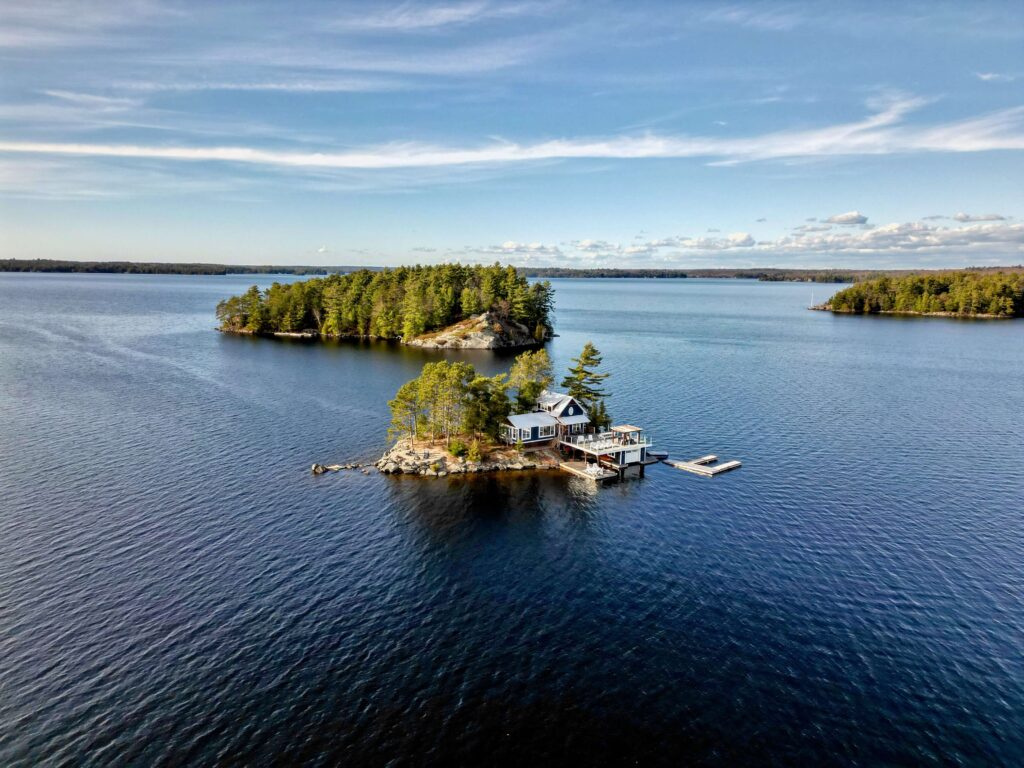
Boat-access island cottages on Lake Muskoka come with huge views – and real logistics to plan for.
Pros of island life
- Privacy, long views, less road noise.
- The “true cottage” ritual of boating in and out.
- Often more sky and horizon, fewer immediate neighbours.
Cons of island life
- You’re committing to logistics: boats, winter access (when safe), hauling groceries, propane and building materials, planning for emergencies.
- The awkward shoulder seasons (freeze-up and break-up) matter: sometimes it’s not safe to boat, but the ice isn’t safe either.
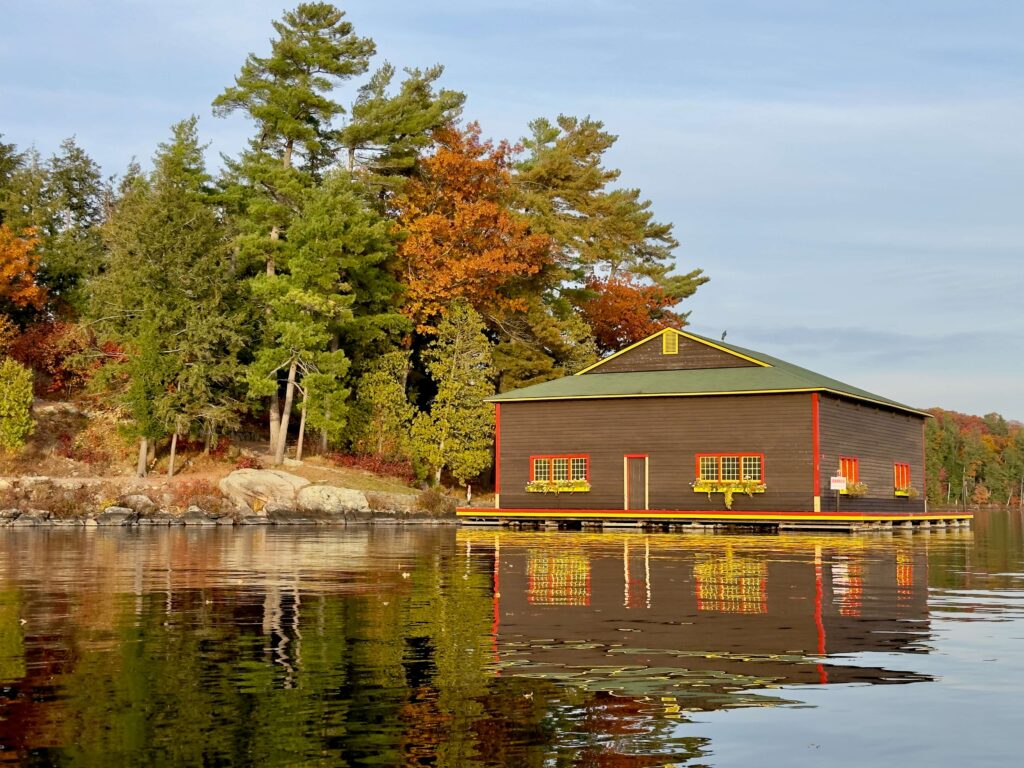
Classic Muskoka boathouses on islands near Beaumaris are part of the Lake Muskoka cottage landscape.
Lake Muskoka island cottages are romantic in July, but the logistics are part of your life nine months of the year. We always spell out the April and November reality for first-time island buyers.
Lake Muskoka Water Levels & Flooding: What Cottage Buyers Need to Know
Very quick history
The Muskoka River watershed has seen multiple significant spring floods, with 2013, 2017 and especially 2019 standing out on Lake Muskoka. In 2013, the lake hit what was widely described as a “100-year flood.” In 2019, water levels measurably exceeded 2013, enough to reverse flows at Port Carling for a period and cause widespread damage to docks, boathouses and roads.
Across a typical year, Lake Muskoka normally fluctuates around 1 m from winter low to summer high; in big years, flood peaks sit well above that range.
What that actually means in plain language
- Not every property is equally exposed.
- Low, flat shorelines and older crib boathouses built barely above normal high water are more vulnerable.
- Areas with constrictions and higher flows – Bala Bay, some river mouths, flat back bays – deserve extra scrutiny.
Water levels affect:
- Where you can safely set finished floor and boathouse elevations
- Insurance availability and cost
- How often your dock is underwater in bad years
- How comfortable you feel sleeping through a heavy rain on spring snowpack
Practical buyer checklist (non-legal)
When we’re looking at Lake Muskoka real estate with clients, we recommend:
- Ask directly: “What happened here in 2013 and 2019?” Sellers who were present often have photos or clear memories.
- Walk the site looking for clues: old water lines on cribbing, staining on posts, new deck boards or repairs from 2019.
- Check municipal / conservation maps: floodlines, hazard mapping and the Muskoka River Water Management Plan context are worth a look. You can use Muskoka GeoHub’s Floodline Mapping App to explore flood-prone areas in 2D and 3D, and to see the line where water may reach on your property.
- Talk to your insurer early: especially if there’s an older, low boathouse. Don’t wait until after you’ve emotionally committed.
- If you plan to rebuild: talk to the local building department about minimum finished floor and boathouse requirements, and be ready for surveys/engineers where elevation is tight.
The goal isn’t to scare you away from Lake Muskoka. It’s to make sure you’re buying with your eyes open and budgeting properly for elevation, shoreline work and insurance.
Boating, Hazards & Getting Around Lake Muskoka
Major routes & “water highways”
Common runs on Lake Muskoka:
- Gravenhurst ⇄ Bala
- Bala ⇄ Port Carling
- Port Carling ⇄ Gravenhurst
- Muskoka River runs up toward Bracebridge
- Through the Port Carling locks into Lake Rosseau and eventually Lake Joseph
In July/August, stretches like:
- Muskoka Bay mouth
- The Beaumaris / Mortimer’s corridor
- Indian River around Port Carling
can feel like water highways – lots of through-traffic, larger wakes and crossing paths.
Hazards (in buyer-friendly terms)
This is Canadian Shield granite country:
- Shoals, rock humps and shelves pop up in surprising places; many are buoyed but not all shortcuts are official.
- Narrow/complex areas to respect include:
- Around Bala Falls
- Weir Channel between Browning & Eilean Gowan
- Certain routes around Walker’s Point and Mortimer’s
- After major storms or spring thaw, you’ll see floating logs and debris – locals pay attention to community warnings and go slower in those periods.
There’s a local joke that there are two kinds of boaters on Lake Muskoka: those who have hit a rock, and those who will. The point is simple: charts and caution aren’t optional.
What kind of boater loves Lake Muskoka?
- People who either already know Shield lakes or are excited to learn proper navigation, use charts/GPS and teach good habits.
- Folks who like exploring by boat – restaurants, markets, locks, sister lakes.
Who might prefer smaller/sheltered lakes?
- True beginners who don’t plan to invest in lessons, charts or a more capable boat.
- People with very small boats who want zero stress crossing big open water in chop.
When we tour, we’ll often show clients both a busy main corridor and a quiet, sheltered bay so they can decide what level of boating intensity actually feels fun vs stressful.
Lake Muskoka Water Quality, Swimming & Day-to-Day Use
Is the water clean?
Overall, Lake Muskoka is a clean, relatively low-nutrient lake. Long-term monitoring shows low phosphorus (roughly 5–7 µg/L in open water) and good clarity. Water clarity is often in the 3.5–5 m Secchi range, depending on area and season.
It’s generally considered safe and pleasant for swimming across most of the lake under normal conditions. The District’s Lake System Health program and groups like the Muskoka Lakes Association sample multiple sites annually for nutrients and bacteria. Blue-green algae advisories have been rare on the main lake, with occasional localized advisories in small bays or along the Moon River – not lake-wide shutdowns.
How it feels by area
- Open, deep areas (central Beaumaris corridor, big water)
Clearer, rockier, very little weed growth. - Shallow, enclosed bays and wetland-adjacent corners (parts of Muskoka Bay, some back bays off river mouths)
More aquatic plants by late summer (milfoil, pondweed). Naturally tea-coloured water from tannins is possible. Localized surface scums or small algae films can happen in stagnant corners, especially after heat waves.
Invasive species – what you actually notice
- Spiny water flea is established and has shifted the zooplankton community, but your day-to-day sign is mostly slightly clearer water.
- Zebra mussels have been repeatedly introduced but haven’t colonized long-term due to soft, low-calcium water.
- Nuisance plants like invasive milfoil and starry stonewort show up in some shallows and around busy launches; they’re annoying, not catastrophic.
Kids, swimming & shoreline types
Public sand beaches like Kirby’s Beach and some Gravenhurst/Bala spots are great for small kids: shallow, sandy, easy entries. Much of Lake Muskoka, though, is classic granite rock entry – beautiful, but steeper drop-offs.
Rough guide we use with families:
- For very young or nervous swimmers, look to more sheltered bays with shorter fetch and shallower, warmer water (north/Bracebridge side, certain Walker’s Point bays, Mirror Lake).
- For stronger swimmers and teens, the big-water sides with rock shelves and deep drop-offs off the dock are usually a hit – as long as someone’s still watching.
Caring for Lake Muskoka: Shorelines, Septics & Being a Good Lake Neighbour
Every buyer on Lake Muskoka is buying two things: a property and a share in the lake itself.
Everyday stewardship that protects the lake (and your investment)
- Keep or restore natural shoreline buffers
Trees, shrubs and native plants help reduce erosion and filter runoff. With an estimated 75–90% of shoreline already altered in some way, the remaining natural edges really matter. - Stay on top of your septic
Regular pump-outs and inspections, sensible water use and avoiding harsh chemicals protect both the lake and your own well and indoor air. - Be mindful of wake and speed near shore
It’s not just about rules – big wakes erode banks, swamp loon nests and trash your neighbours’ docks. - Think about dark-sky friendly lighting
Enough light to be safe on the dock, not so much that you light up the entire bay.
The short version: good lake behaviour keeps Muskoka looking like the Muskoka you fell in love with, and it protects your property value.
Lake Muskoka Cottage Market – What You Actually Get
Big picture
When you look at Lake Muskoka cottages for sale, you’ll see more variety than on the ultra-prime pockets of Rosseau and Joe. Lake Muskoka is generally more varied and somewhat more accessible on price, but you’re still in luxury territory at the high end.
On a single lake, you’ll see:
- Century-old heritage cottages
- 1960s/70s Pan-Abode and simple family cabins
- Complete tear-downs
- Huge new builds with multi-slip boathouses
- Fractional/condo-style units linked to resorts in a few corridors
Key value drivers on Lake Muskoka
When we talk value, we’re usually talking about:
- Exposure: sunset vs sunrise, prevailing winds, winter snow load
- Privacy and frontage width
- Water depth and bottom type off the dock (sand vs rock vs soft/weedy)
- Boathouse: none, basic single-slip, or full 2-storey with accommodation
- Access: road vs boat-access, winter maintenance, distance to town
- Address prestige: Beaumaris / Mortimer’s / heritage islands vs quieter corners
- Flood profile and elevation: especially in constricted or river-influenced areas
Budget reality (without hard numbers)
Without dropping specific price points (they move), the honest framing is:
- With a more modest budget, on Lake Muskoka you’re realistically looking at older cottages, less-central bays or narrower frontage, rather than trophy big-water estates with 300’ of frontage and a big boathouse.
- If you want brand-new, big boathouse, sunset exposure, central-lake and strong privacy, you’re now in the same conversations as the best parts of Rosseau/Joe.
Our job is often to say, “With this budget, here’s where your money works hardest on Muskoka – and here’s where it doesn’t.”
Year-Round vs Seasonal Living on Lake Muskoka, Ontario
Where year-round is realistic
Year-round living works best where you have municipal, plowed roads close to Gravenhurst, Bracebridge, Bala or Port Carling.
Examples:
- Gravenhurst / Muskoka Bay side
- Bracebridge side (Beaumont Dr, Strawberry Bay, Kirby’s area)
- Some sections of Walker’s Point and Milford Bay with maintained roads
Boat-access islands and long private lanes signed “No Winter Maintenance” are not realistic for daily commuting.
Winter reality
- Roads can be steep, icy and narrow, especially side roads and point roads.
- Spring thaw brings mud, frost heaves and, in big flood years, sections of road literally underwater.
- Freeze-up and break-up seasons create awkward shoulder periods where the boat is sketchy, but the ice isn’t safe yet – a big deal for island or semi-remote properties.
Trade-offs
Year-round living
- Pros: quick access to hospital, schools, winter sports and proper grocery runs.
- Cons: more neighbours, more road noise, less “lost in the woods” feeling.
Highly seasonal spots
- Pros: magical summer, dark skies, quiet and that “end of the road” feeling.
- Cons: winter is snowmobile/ATV or not at all; you plan around plows, fuel and ice safety.
Some clients fall in love with four-season living; others visit in March and realize they’re 100% summer-only people – both are valid, but it’s better to know before you buy.
Who Lake Muskoka Is Perfect For (and When to Look Elsewhere)
Lake Muskoka is perfect if you:

For many families, Lake Muskoka is about simple things: a quick sunset cruise at the end of a busy cottage day. Pictured: Catharine’s grandson Peter and son Chris on a family cruise on Lake Muskoka
- Want to be in the heart of cottage country – marinas, ski shows, concerts, markets and restaurants all within reasonable boat or car distance.
- Have kids/guests who will actually use town runs, activities and a bit of buzz.
- Are comfortable learning about water levels and navigation and don’t expect an isolated back-lake bubble.
- Like having different micro-vibes to choose from: busy corridor, sheltered bay, islands, river arms.
You might prefer other lakes/areas if you:
- Crave deep quiet, low boat traffic and don’t care about boating to restaurants or the Kee.
- Want minimal exposure to flood risk and don’t want to think about dams, flows or historic peaks.
- Prefer smaller, warmer lakes where you can let kids wander on paddleboards without worrying about crossing traffic lanes.
FAQs About Lake Muskoka for Cottage Buyers
Is Lake Muskoka good for first-time cottage buyers?
Yes – if you’re willing to learn boating and do some homework on water levels. It’s excellent for families who want town access and lots to do, but not ideal if you want a completely quiet, low-traffic experience.
Is Lake Muskoka safe from flooding?
“Safe” isn’t the right word. Some properties are well elevated and have come through 2013 and 2019 just fine; others are more exposed. Focus on site-specific risk management and due diligence, not blanket reassurance.
What towns are closest to Lake Muskoka?
Gravenhurst, Bala and Bracebridge are directly on or connected to the lake; Port Carling connects via the Indian River and locks to Lakes Rosseau and Joseph.
How busy is Lake Muskoka in summer?
Some corridors are very busy on peak weekends; other bays stay relatively calm. Where you buy and how you use the lake makes a big difference.
Can you boat from Lake Muskoka to Lake Rosseau and Lake Joseph?
Yes. You go through Port Carling and the lock system on the Indian River. Plan for wait times on holiday weekends.
Are Lake Muskoka cottages a good investment?
Waterfront is finite and long-term demand has been strong, but the market does move in cycles. The safest approach is to buy primarily for how you’ll use and enjoy the cottage, and let appreciation be a long-term bonus.
Next Steps – Talk to Someone Who Actually Knows Lake Muskoka
If Lake Muskoka is on your radar, the next step isn’t scrolling more generic listings – it’s getting clear on:
- Busy vs quiet
- Town-access vs tucked-away
- Flood-profile comfort
- Year-round vs summer-only
- Mainland vs island
That’s the kind of conversation we can have in 20–30 minutes on a call or, even better, on a boat with a map in front of us.
From there, we can:
- Narrow you to a few specific bays, corridors or islands that actually match how you live.
- Give straight talk on traffic, water feel, winter reality and logistics in each.
- Help you align budget vs expectation so you don’t waste a season chasing the wrong kind of cottage.
We’re not here to talk you into buying on Lake Muskoka if another lake fits you better. We’re here to make sure that if Lake Muskoka is the right move, you know exactly what you’re signing up for – and you end up in a cottage you’ll still be happy with ten summers from now.