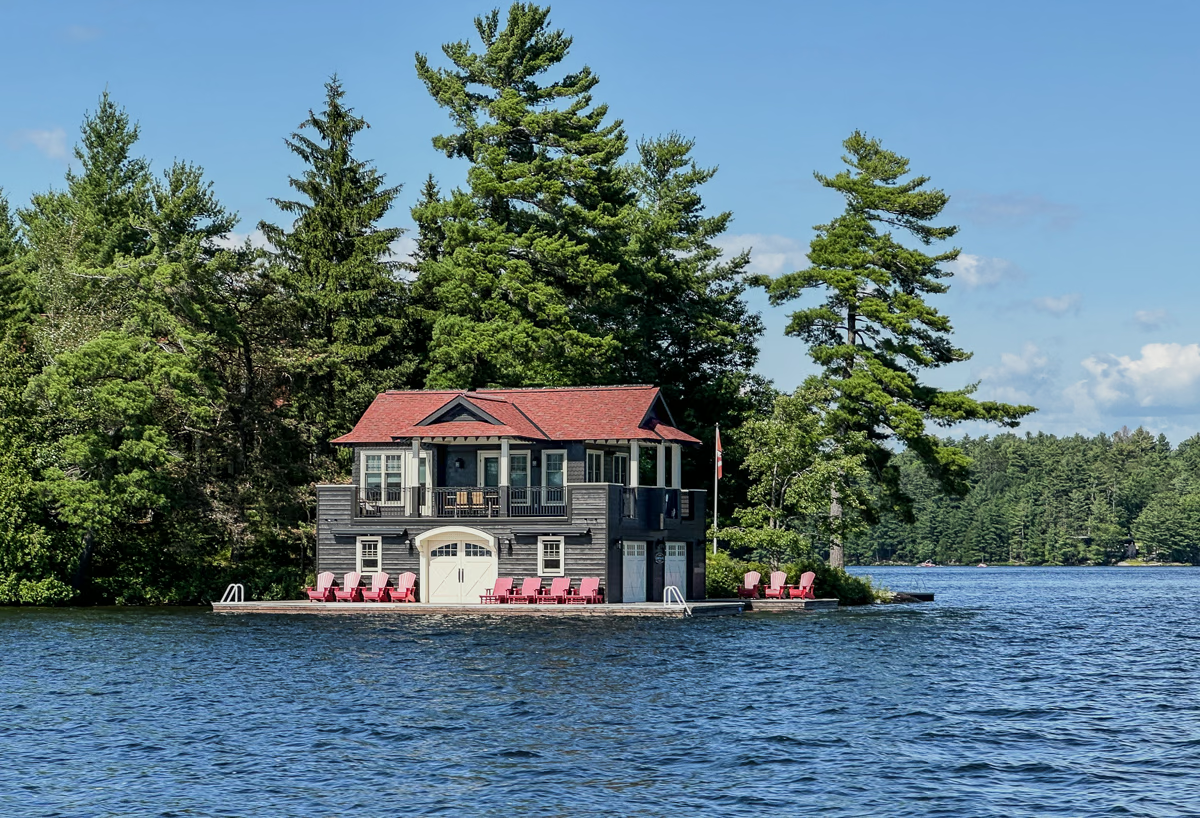
 If you want a private strategy session instead of reading 6,000 words: call Catharine at 705-801-2304 or email cath@cottageinmuskoka.ca. She sells exclusively in Muskoka waterfront and can give you an honest read of your specific property in 20 minutes.

Catharine Inniss has been selling Muskoka waterfront for over 20 years. She works primarily on Lake Muskoka, Lake Rosseau, and Lake Joseph, and is a Sales Representative with Johnston & Daniel Rushbrooke Realty Inc. Brokerage in Port Carling. Over her career, Catharine has been first to break price benchmarks in the market – including the first waterfront cottage sale over $1 million on a major Muskoka lake, and the first subdivision home sale over $1 million in the area. This guide is based on her direct transaction experience combined with primary municipal and federal sources.
“We decided to sell our Muskoka retreat, and we are so grateful to have had Catharine representing us! Catharine listened carefully to our needs, was honest, outlined clear goals and expectations for our plan going forward, and, well, she exceeded our expectations by securing multiple serious buyers in a short period. The whole process was relatively stress-free, and there were no surprises. Catharine is caring, experienced and very competent, and I highly recommend her if you are looking at buying or selling in Muskoka!”
1. The 2026 Market Reality Every Muskoka Seller Needs to Understand
In 2021 and early 2022, selling your Muskoka cottage was largely forgiving. Properties moved quickly, multiple offers were common, and buyers set aside many of the conditions they’d normally rely on. That market is gone.
Based on 2025 data, here’s what the Muskoka waterfront market actually looks like heading into 2026:
- Inventory is dramatically higher. Average active waterfront listings across Muskoka grew from roughly 204 in 2022 to roughly 504 in 2025 – up approximately 147%.
- Sales didn’t fall off a cliff – they’re down only about 9% over the same period. This isn’t a dead market. It’s a selective one. Buyers can compare. They will.
- The market runs at different speeds by township. Based on 2025 months-of-inventory data: Muskoka Lakes and Bracebridge moved faster (roughly 7-8 months), while Lake of Bays and Georgian Bay were the slowest (roughly 14–15 months). Know where your property sits on that spectrum before you list.
- Average prices are misleading. In Muskoka Lakes, the 2025 average sale price was approximately $2.51M, but the typical (directional median) sale price was closer to $1.46M. The gap exists because a small number of luxury sales pull the average up. Your pricing strategy needs to reflect where your property sits in its actual sub-niche – lake, exposure, access, condition – not the headline average.
What this means for sellers in 2026: If your cottage is correctly priced, properly documented, and well-presented, it will sell. If you’re testing the market with a high number you can “come down from later,” you risk turning one season into two – and in a selective market, stale listings negotiate from weakness.
The single most expensive mistake Muskoka sellers make is confusing the price they hope to achieve (anchored to the 2022 peak) with the price the market will actually pay in 2026. We cover pricing strategy in detail in Section 8.
For the full data behind these numbers, see our 2026 Muskoka Waterfront Market Report.
Want a frank, data-backed valuation for your specific property? Email Catharine or call 705-801-2304. She prices based on lake-specific, apples-to-apples comps – not district-wide averages.
2. The Pre-Listing Legal & Title Checklist
This is where most Muskoka sellers are caught off guard. The issues below are not rare edge cases – they are routine on waterfront properties in Muskoka and each one has the potential to kill or renegotiate a deal if discovered mid-transaction.
The right time to deal with these issues is before you list, not after an offer comes in. Every unresolved issue that surfaces during buyer due diligence becomes a lever in the negotiation.
Shore Road Allowance (SRA): The 66-Foot Strip You May Not Own
The Shore Road Allowance (SRA) is one of the most misunderstood issues in Muskoka real estate – and one of the most transaction-critical.
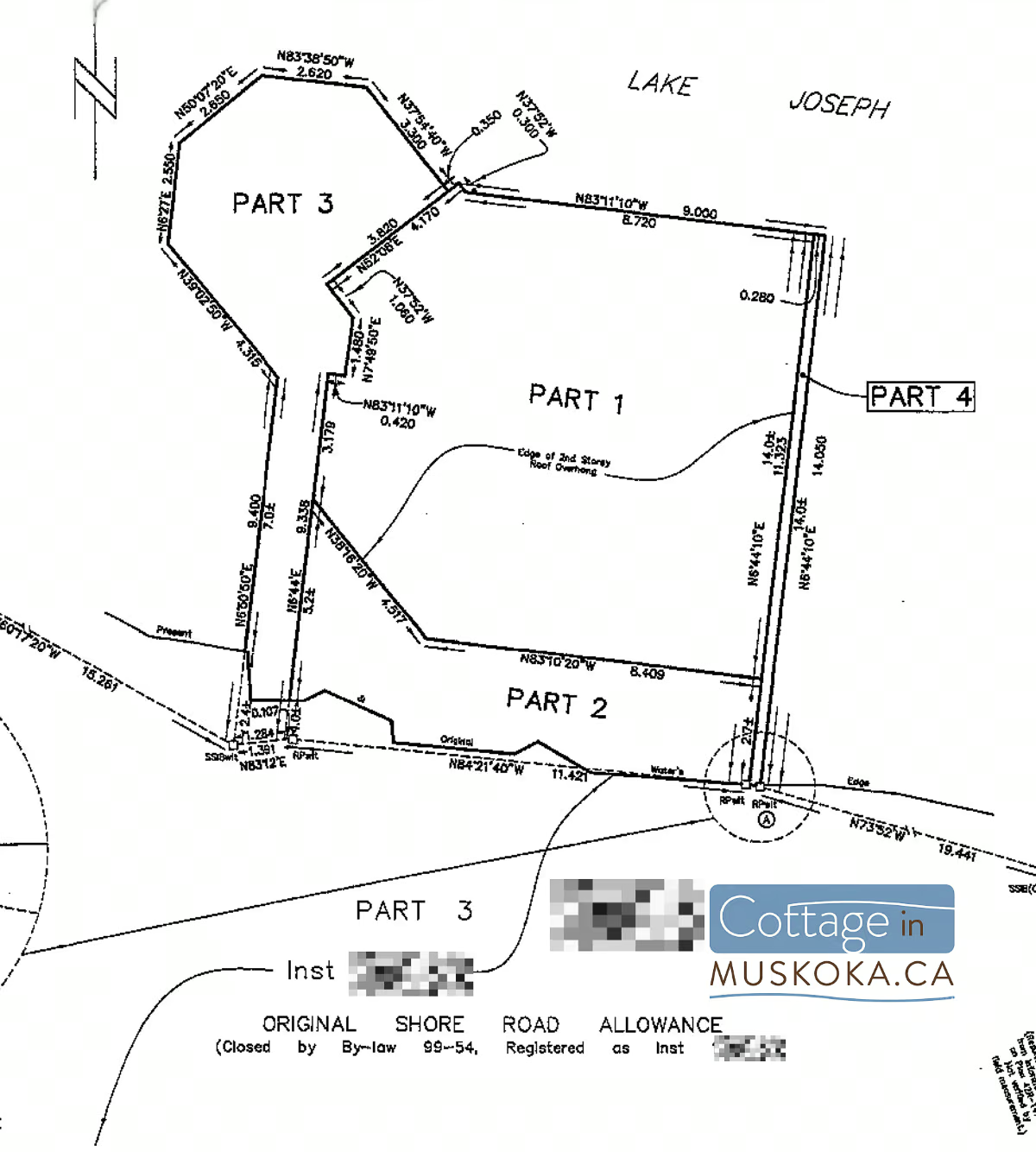
A typical survey plan illustrating how the Shore Road Allowance (SRA) sits between the cottage “Part” and the water’s edge.
What it is: A 66-foot-wide strip of land along the shoreline of many Muskoka lakes, originally set aside by Crown surveyors in the late 1800s for public road access, logging, and transportation. The SRA is typically owned by the municipality, not the adjacent cottage owner – even though your dock, boathouse, stairs, and sometimes part of your cottage may sit on it.
An important detail many sellers don’t realize: Not every Muskoka waterfront property has an SRA. Whether one exists depends on when and how the original Crown survey was conducted for that particular lake or section of shoreline. Some lakes were surveyed with SRAs and some were not. On lakes where the water level has been artificially raised by dams, portions of the original SRA may now be partially or fully underwater. The provincial government – which maintains specific policies regarding the disposition of road allowances and shoreline reserves – had at one point considered building roads along the lake shores; when that was deemed unfeasible, the SRA strips were transferred to municipalities. The bottom line: never assume your property has – or doesn’t have – an SRA. It has to be confirmed on a property-by-property basis.
Why it matters when you sell: If your structures sit on unpurchased SRA, they are technically unlawful unless you have either purchased the SRA from the municipality (closing it) or hold a licence of occupation. Sophisticated buyers and their lawyers will check this. If the issue is discovered at the offer stage, it becomes an immediate negotiation point – often around price, closing conditions, or seller obligations to resolve it before closing.
The options:
- Purchase/closure (OSRA/ORA closure): You formally apply to purchase the shore road allowance from the municipality. Ownership is then added to your title. This is the cleanest resolution for buyers and lenders. It typically requires a survey or reference plan, municipal land valuation, and council approval. Timelines vary significantly by township – plan for six months to a year in most cases, sometimes longer if there are complications.
- Licence of occupation: An alternative for situations where full closure isn’t possible (for example, where the SRA falls in a retention area due to environmental or navigation constraints). A licence of occupation gives you the right to maintain structures on municipal land, but does not transfer ownership. Annual fees apply. This is a more complex title situation for buyers and their lenders.
- Retention areas and denial: Not all SRA can be purchased. Municipalities may retain certain shoreline areas – for example, where the SRA is underwater, where there are significant fish habitat or navigation concerns, or where environmental constraints exist. If your SRA is in a retention area, the licence of occupation path (where available) may be the only option.
What delayed SRA action can actually cost: Catharine has seen firsthand what happens when this issue is left unresolved – she worked with a client who had held a large waterfront parcel for decades and wanted to sever part of it. At the time they originally purchased, acquiring the Shore Road Allowance would have cost a few thousand dollars – but no one advised them to do it, and they didn’t see the urgency. By the time they moved to sever, the rules had changed: the SRA purchase price was now based on full market value rather than the township’s original schedule. The cost jumped from what would have been a few thousand dollars to over $300,000. Had they been working with an agent who understood SRA implications from day one, that conversation would have happened years earlier – when the cost was negligible.
How to verify your SRA status: A knowledgeable Muskoka real estate agent can often give you a preliminary read on your SRA status using GeoWarehouse, the professional property data platform that provides title, legal description, and parcel information for every property in Ontario. A good agent will flag the SRA question at the very first listing conversation – it’s one of the first things Catharine checks. From there, your real estate lawyer can do a formal confirmation through the title search and municipal records. If the SRA was purchased (closed), it will appear in your chain of title. If it hasn’t, structures on it are technically on municipal land.
This is one of those distinctly Muskoka issues that makes it so important to work with a real estate agent who specializes in this market. The agent you use for your city home may be excellent at what they do — but if they don’t know to check the SRA status on day one, or don’t understand how it affects pricing, negotiations, and closing, it can cost you time and money.
Each of the six Muskoka municipalities (Muskoka Lakes, Huntsville, Bracebridge, Gravenhurst, Lake of Bays, Georgian Bay) has its own application process, fee schedule, and policy framework. If you’re unsure, call the municipal building or planning department directly – most have a land disposition or OSRA process page, or can direct you to the right contacts.
Will buying your SRA increase your taxes? It can – MPAC may adjust your assessment when the SRA is added to your property. Factor this in, but remember: for most buyers, a clear title with the SRA purchased is worth more than a title with an outstanding encroachment question.
Boathouse & Dock Permit Status: What Buyers Will Ask
Muskoka buyers – and their lawyers – increasingly ask for documentation of all waterfront structure permits. Boathouses in particular are subject to complex, municipality-specific rules that vary significantly across Muskoka’s six townships.
What to verify before you list:
- Does a building permit exist for your boathouse and dock? If the structures were built before modern permit requirements, you may have legal non-conforming (grandfathered) status – but you need to understand what that means for any future work.
- Does the boathouse comply with current dimensional rules (height, storeys, setbacks, maximum width as a percentage of frontage)?
- If the boathouse is non-compliant or unpermitted, what are the options – variance, removal, disclosure with price adjustment?
- Do structures sit on SRA (addressed above)?
- Has any work been done on cribs or stringers without a permit? In Muskoka Lakes, dock structural work is permit-required even when the footprint isn’t changing.
Why this matters: A boathouse that is “legal non-conforming” (built before rules changed and grandfathered) is sellable – but you need to be able to explain that clearly. A boathouse that was recently modified without permits, or that has a second storey in a township where two-storey boathouses are prohibited, creates a more serious problem. Some municipalities prohibit two-storey boathouses entirely (Huntsville’s rules state a boathouse shall not contain more than one storey). Others require minimum frontage thresholds for two-storey structures and require Category 1 lake classification.
The negotiation risk: Any boathouse or dock issue that surfaces after the buyer’s offer is in place becomes leverage. The buyer can use it to renegotiate price, require repairs, ask for remediation holdbacks, or simply walk away if their financing or insurance depends on a clean structure. Disclosing the issue proactively – with a clear written explanation of status – is almost always better than having a buyer “discover” it.
Septic Systems & the Muskoka Lakes SSMIP
In the Township of Muskoka Lakes, the Sewage System Maintenance Inspection Program (SSMIP) is a mandatory program – and it can directly affect your sale timeline and terms.
How the SSMIP works: The Township classifies every private sewage system by risk level and assigns an inspection type and frequency accordingly. The program has been in active implementation since 2024, with inspections running by zone on a rotating basis between May and October each year. When your zone comes up, eligible systems in that zone are scheduled according to their risk category.
In 2026, Phase II inspections are taking place in Zone 3 (properties with roll numbers beginning with 445307 and 445308), with Phase I inspections also being conducted in Zone 3 and follow-up inspections continuing in Zones 1 and 2. You can find your property’s roll number on your tax bill or through the Muskoka GeoHub map.
Risk classification and inspection schedule:
| Risk Level | Typical Characteristics | Inspection Type | Frequency |
|---|---|---|---|
| High | No records on file, steel tanks, system over 30 years old, or system over 10 years old on a property abutting a waterbody with confirmed water-quality issues | Phase II (detailed, third-party) | Every 5 years |
| Moderate | System 10–30 years old on a navigable waterbody without confirmed water-quality issues | Phase I (screening/visual by Township staff) | Every 10 years |
| Low | System less than 10 years old, or property not abutting a navigable waterway | None at this time | No set interval |
Phase I inspections are conducted by Township staff. Property owners are only notified of results if further information or action is required.
Phase II inspections are more invasive – they can include opening tanks, checking performance, reviewing design and sizing, and additional testing (flow tests, soil sampling if needed). Owners are required to expose tank lids in advance. Phase II inspections are completed by a qualified third-party inspector (the Township has engaged Envision Consultants Ltd., though property owners can also retain their own qualified inspector before the deadline). Fees are generally in the $340-$355 range depending on whether permit records exist, plus a $25 admin fee and applicable HST.
What happens if your system is found non-compliant? The Township can require repairs or upgrades. If your lot is very small, modern setback requirements may make a standard replacement Class 4 system impossible to install – which becomes a disclosure item and potential value issue. Septic replacement costs in Muskoka typically start around $25,000-$40,000 for a standard system. If your lot can’t accommodate a standard replacement, the options (engineered systems, holding tanks) are more expensive and more complicated to sell.
What sellers should do before listing:
- Find your septic permit record (or verify it doesn’t exist in Township records).
- Have the tank pumped out – inspectors need clear access to lids and to assess properly.
- If you’re “high risk” under the SSMIP criteria, consider proactively scheduling a Phase II before the listing goes live, so you’re not dealing with an active inspection mid-transaction.
- If you have a Class 5 holding tank, gather your haulage agreement, alarm documentation, and capacity records – buyers and their lawyers will ask for these.
Why your agent needs to be ahead of the septic, not behind it: Preparing for a septic inspection is the listing agent’s responsibility as much as the seller’s. This means identifying the septic openings, confirming access for inspectors, and having documentation ready – before the property is on the market, not scrambling during a live transaction.
Here’s what happens when that doesn’t occur: Catharine was representing a buyer on a Muskoka waterfront property where the seller’s agent had not determined where the septic openings were before listing. During the buyer’s inspection, the inspector couldn’t locate the access point. The seller – already stressed about the sale – wanted to cancel the inspection entirely and call off the deal, which could have triggered a lawsuit. The seller’s agent was unreachable. Catharine stepped in, calmed the seller, and worked with him and the inspector to locate the opening. The inspection went ahead, everything checked out, and the deal closed with both sides satisfied. But it nearly collapsed, and would have, without someone in the room who understood both the technical and the human side of Muskoka transactions.
The lesson for sellers: your agent should be identifying and resolving these access and documentation issues before you ever accept a showing, let alone an offer. If they’re not, you’re exposed to exactly this kind of mid-deal crisis.
Outside Muskoka Lakes: The SSMIP is specific to the Township of Muskoka Lakes. Other townships (Bracebridge, Huntsville, Gravenhurst, Lake of Bays, Georgian Bay) have their own approaches and disclosure requirements. The general principle applies everywhere: a documented, working septic system with a clear permit history is a major advantage in Muskoka cottage transactions. The absence of records is a problem you want to solve before the listing launches.
Short-Term Rental Licensing & Sale Implications
If you’ve operated your Muskoka cottage as a short-term rental (Airbnb, VRBO, or similar), there are several interlocking issues that affect your sale:
STR licensing: Some Muskoka municipalities have introduced or are introducing short-term rental licensing requirements. The Township of Muskoka Lakes has been actively developing licensing rules – operating an unlicensed STR can expose you to fines and can affect the SSMIP risk classification for your septic (unlicensed STR status puts you in the “high risk” category for Phase II inspections). Before you list, confirm your licensing status and compliance with your municipality’s current requirements.
Buyer value and financing: A licensed, compliant STR with documented rental income can command a premium – it gives buyers confidence that the income history is legitimate and that the property’s STR operation is defensible. An unlicensed or undocumented STR adds uncertainty around continuity of the income stream and possible compliance costs.
Occupancy limits: In some municipalities, occupancy limits for STR licensing are tied to septic capacity documentation. If your system’s as-built or permit shows a capacity that limits the number of guests, that number may constrain your licence – and your rental income profile. Know this before the listing, not after.
GST/HST: If you’ve been earning STR income, there may be GST/HST implications on the sale itself. This is covered separately in Section 6.
3. The Documentation Pack Buyers & Lawyers Will Expect
In Catharine’s experience, fewer than 3 in 10 sellers she meets have a complete documentation package when she first visits the property. That’s a problem in Muskoka’s selective 2026 waterfront market – buyers need details in order to commit, and they need them quickly. When a buyer expresses interest and the seller can’t produce documentation, the window of peak enthusiasm closes while everyone waits. By the time the paperwork arrives, the buyer’s interest has often gone cold – or they’ve moved on to a property where the seller was better prepared.
One of the clearest ways to reduce buyer friction – and to support your asking price – is to have a complete documentation pack ready before the property hits the market. Every document you can’t provide becomes a buyer due-diligence item, a deal condition, or a negotiation point.
Here is what Muskoka buyers and their lawyers will typically request or investigate:
Title & survey documents
- Current survey (ideally showing all structures, including waterfront structures, in relation to lot lines and the SRA)
- Title search documents showing SRA status (purchased, licence of occupation, or outstanding)
- Any easements or rights-of-way registered on title (road access, shared driveway, utilities)
- Confirmation of road type: municipal, private/unassumed, water access only. If the road is private, confirm who owns it and whether a registered right-of-way (R.O.W.) exists on title – noting whether it is appurtenant or in gross, exclusive or non-exclusive. Buyers’ lawyers will check this, and lenders may decline to finance a property without a properly registered right-of-way. Missing or informal road access arrangements are a surprisingly common issue on older Muskoka properties.
Building permits and structure documentation
- Building permits for the cottage, any additions, and all ancillary structures
- Building permits (or lack thereof) for dock and boathouse, including any renovations or repairs to cribs/stringers
- MNRF land use permit for boathouse/dock work if applicable (depends on lakebed contact area)
- DFO authorization if in-water work was done
- Any zoning compliance certificates or letters of compliance from the municipality
Septic system records
- Septic building permit (original installation)
- As-built drawings showing system location, type, capacity, and setbacks
- Most recent inspection report
- Pump-out records
- For holding tanks: haulage agreement with a licensed operator, alarm documentation, capacity evidence
- For STR properties in Muskoka Lakes: SSMIP inspection report if one has been conducted
Water system records
- Type of water supply: drilled well, dug well, lake intake, or municipal water
- Well records (drilling log, pump installation records) if applicable
- Recent bacteriological water test results (within 30 days of listing is ideal)
- Winterization records and documentation of freeze-risk mitigation if applicable
STR documentation (if applicable)
- STR licence from the municipality
- Rental income history (useful for buyers financing based on income; advisable to have your accountant prepare a summary)
- Rental platform agreements and booking history
- Insurance policy confirming STR coverage
Other commonly requested documents
- Property tax notices and MPAC assessment
- Utility bills (hydro, gas, propane)
- Condominium or private road association documents and budgets if applicable
- Any outstanding work orders, compliance orders, or notices from the municipality
- Disclosure of any known easements affecting neighbouring properties’ access over your land
Seller tip: Missing or incomplete records are one of the top causes of deal conditions, price renegotiations, and extended closing timelines in Muskoka transactions. Investing time in assembling this pack before you list will almost always pay back more than the effort costs.
4. What It Actually Costs When Selling Your Muskoka Cottage
Sellers are often surprised by the full scope of transaction costs. Here is a realistic line-item breakdown. All figures are general estimates and will vary based on your specific situation, property, and advisors — use this as a planning framework, not a quote.
| Cost Item | Typical Range | Notes |
|---|---|---|
| Real estate commission | Commission rates vary; discuss with your agent | Commission depends on the brokerage, property complexity, and marketing scope |
| Legal fees (your lawyer) | $2,500–$5,000+ | Higher if SRA, title issues, STR disclosure, or complex closing adjustments are involved |
| Survey or reference plan | $3,000–$8,000+ | Required if an updated survey is needed or if you’re pursuing SRA closure |
| SRA purchase/closure costs | Land valuation price (varies by frontage and township) + legal + survey | The land price itself is set by the municipality based on frontage and per-square-foot rate; legal and survey add $3,000-$10,000+ on top |
| Septic inspection / pump-out | $300–$700 pump-out; Phase II inspection fees $340–$355+ (plus $25 admin fee and HST) | Phase II under Muskoka Lakes SSMIP triggers additional fees; costs vary by contractor |
| Pre-listing home inspection | $500–$900 | Optional but valuable; ensure you hire an inspector experienced with Muskoka waterfront properties – covering cottage, waterfront structures, septic, well, and dock/boathouse |
| Professional photography & video | $800–$3,000+ | Aerial/drone video is standard expectation in this market segment; do not skip this. Note: professional photography and video is typically paid for by the listing real estate agent as part of their marketing services – confirm this with your agent. |
| Staging | $0–$5,000+ depending on scope | At a minimum, a professional de-clutter and styling consult; full staging on higher-value properties pays back |
| Closing adjustments | Variable | Property taxes, utilities, condo or road association fees are typically pro-rated at closing |
| Capital gains tax | Depends on your gain and structure | See Section 5 for 2026 rules |
| GST/HST (if STR property) | Variable | See Section 6 – may be significant if you’ve been operating as a GST/HST registrant (i.e., you were registered for GST/HST because your taxable STR revenues exceeded $30,000 annually, or you voluntarily registered) |
Rule of thumb for planning: Budget for total transaction costs (excluding capital gains and GST/HST) of roughly 5-9% of the sale price for a typical Muskoka waterfront sale. Properties with unresolved legal issues (SRA, permits, septic) can push this higher. Discuss the specific cost profile for your property with your lawyer and real estate agent before you set your pricing expectations.
5. Capital Gains & Tax Considerations When Selling Your Muskoka Cottage in 2026
This section is informational. It is not tax advice. Speak with a qualified accountant or tax lawyer before making decisions based on tax considerations – especially given recent federal policy changes that may affect your specific situation.
The 2026 capital gains landscape: what changed
Selling a cottage (as a secondary property) triggers capital gains tax on the profit – the difference between your adjusted cost base (ACB) and the net proceeds.
The current rules as of March 2026: The capital gains inclusion rate remains at 50% (one-half). In March 2025, Prime Minister Mark Carney’s government announced the cancellation of the previously proposed increase to the capital gains inclusion rate (which would have raised the rate to two-thirds for gains above a $250,000 annual threshold). That proposed increase, originally announced in the 2024 federal budget and later deferred to January 1, 2026, was formally scrapped. The Carney Liberals were re-elected in April 2025 with a commitment to keep the inclusion rate at 50%.
What this means for cottage sellers: All capital gains continue to be taxed at the one-half inclusion rate – meaning 50% of your capital gain is added to your taxable income and taxed at your marginal rate. There is no higher rate tier for gains above $250,000 as had been proposed. This is positive news for Muskoka cottage sellers with significant gains.
A note of caution: Tax policy can change. As of the date of this guide, the 50% rate is in effect and the current government has stated it will remain. However, the government holds a minority and future legislation could alter the landscape. Consult your accountant for planning purposes.
What counts as your ACB (and why getting it right matters): Your adjusted cost base is not just your original purchase price. It includes:
- Original purchase price plus closing costs (legal fees, land transfer tax)
- Capital improvements made over your ownership period (additions, major renovations, new roof, new dock or boathouse if permitted)
- Legal fees and surveys paid in connection with the property
- Commissions and professional fees paid at the time of purchase
Many Muskoka cottage owners have owned their properties for decades and have significantly under-documented their cost base. Every capital improvement you can document reduces your taxable gain. If you’re planning to sell, start pulling together receipts, contractor invoices, and permit records now. The effort is often worth tens of thousands of dollars in tax savings.
Principal residence exemption
If your Muskoka cottage was designated as your principal residence for some or all of the years you owned it, those years may be exempt from capital gains tax. The rules on this are complex – especially if you also own a primary residence – and they’ve evolved over time. This is a conversation for your accountant, not a shortcut to take on your own.
Holding structure considerations
If your cottage is held in a corporation or a trust, the capital gains mechanics are different from individual ownership. Corporations do not benefit from the same individual-level structures, and the tax treatment within a corporation has its own complexities. If your property is in a corporation, talk to your accountant about implications well in advance of listing.
6. GST/HST When Selling a Short-Term Rental Cottage
This section is informational, not tax advice. CRA rules are fact-specific and the implications of getting this wrong can be significant. Engage a tax professional who understands the Excise Tax Act.
If you’ve operated your Muskoka cottage as a short-term rental, you may have GST/HST obligations on the sale that can catch sellers off guard.
The basic framework (CRA GI-025)
CRA publication GI-025 covers the GST/HST treatment of vacation properties across purchase, use, and sale. The key principle is this: if you have been making taxable short-term rentals (generally, rentals under 30 days), you may be treated as a GST/HST registrant (meaning you were required to register for and collect GST/HST because your annual taxable revenues exceeded $30,000, or you voluntarily registered). Registrants who change the use of a property – for example, going from commercial use (STR) to personal use – can trigger a “deemed supply” event, which is essentially treated as if you sold the property to yourself at fair market value, potentially creating a GST/HST liability. Similarly, the actual sale of the property may be taxable depending on the use history.
Key questions that determine your exposure
- Were you a GST/HST registrant? If your taxable STR revenues exceeded the $30,000 annual threshold, you were required to register. If you didn’t, there may be back-filing obligations – deal with this now, before the sale.
- What percentage of use was commercial vs personal? If the property was rented out for part of the year and used personally for the rest, CRA looks at the proportion of use. Primarily personal use (more than 50%) can affect which rules apply.
- Did you claim input tax credits (ITCs) on renovations or improvements while operating as an STR? If so, a change-in-use or sale may trigger a requirement to remit.
- Is the buyer continuing the rental operation? If the sale is structured as a going-concern transfer to a buyer who will continue the STR operation, there may be GST/HST relief available – but specific conditions must be met.
The bottom line: If you’ve earned meaningful STR income in recent years, talk to a tax professional before you set your net proceeds target. GST/HST on a STR property sale can be significant and can dramatically affect your after-tax position.
7. Pre-Listing Preparation: What Pays Off and What Doesn’t
Preparation drives price – not just in theory. Over the course of her career, Catharine has broken market records multiple times – including being first to sell a waterfront cottage for over $1 million on a popular Muskoka lake, and first to sell a subdivision home for over $1 million in the area. In both cases, the documentation was complete and the properties were impeccable. Record prices don’t happen by accident. They happen when the preparation removes every reason for a buyer to hesitate.
In a selective market, presentation matters more than it did in the boom years. But not all pre-listing investment is equal. Here’s a frank breakdown:
What generally pays off
- Professional photography and drone/aerial video. This is non-negotiable in Muskoka. Buyers often start their search online and form strong impressions before they ever set foot on the property. Bad photos cost you showings. Catharine has seen this play out directly – on several occasions she has previewed cottages that had been sitting for months with no interest, only to find that the property was beautiful and the problem was entirely the photographs. In each case, the poor marketing created an opportunity for her buyers to negotiate a strong deal – which was a direct financial loss for the seller.Great photos – especially aerial shots that show the waterfront, the exposure, and the setting – help get buyers to the door. Professional photography and video is typically covered by the listing real estate agent as part of their marketing package, but confirm this upfront.
- Septic in good working order. A failed or questionable septic system is one of the single biggest deal killers in Muskoka cottage transactions. Catharine has seen more deals renegotiated or collapsed over septic issues than almost anything else. If your system is aging, get it inspected and serviced before you list. If there’s a problem, you want to know about it on your terms – not mid-negotiation when the buyer’s inspector flags it and you’re suddenly facing a $30,000+ repair demand as a condition of closing.
- Roof in solid condition. Right behind septic, the roof is another top deal killer. A roof that’s clearly at the end of its life – sagging, missing shingles, visible wear – immediately makes buyers wonder what else has been deferred. Have the roof inspected. If it needs attention, either address it before listing or factor it into your pricing. Nothing erodes buyer confidence faster than standing on a dock looking up at a cottage with a failing roof.
- Deep cleaning and de-cluttering. Muskoka cottages accumulate decades of “stuff.” A professional clean plus a ruthless de-clutter (off-site storage for excess furniture, old equipment, personal items) makes a significant difference in how spacious and cared-for the property feels. ROI is high.
- Deck and dock cleaning/minor repairs. Buyers form a first impression at the water, not just the front door. Power-wash the dock, refinish the deck boards if they’re splitting, replace any obviously broken components. Don’t do structural work without confirming permit requirements first.
- A shoreline clean-up. Trim back overgrown areas near the water, remove debris, and ensure the swimming and dock approach look inviting. Buyers visualize their summer – make it easy for them to do that. That said, don’t over-clear your shoreline – the natural littoral zone is part of what keeps Muskoka lakes healthy. Our article on the littoral zone and shoreline stewardship explains the balance.
- Resolving the legal/title issues (SRA, permits, septic). This is covered above, but it bears repeating: resolving known issues before you list is almost always worth more than the cost. A clear story increases buyer confidence, reduces conditions, and supports your price.
What buyer inspections actually catch: When Catharine’s buyer, Paula, was purchasing a cottage on Pine Lake, the property appeared to be in great shape. Catharine suggested a full home inspection anyway. The inspector discovered that the roof’s plywood sheathing panels weren’t clipped into each other – a structural issue invisible from the ground but dangerous under Muskoka’s heavy snow loads! The seller had the plywood properly secured, the inspector returned, and the deal closed. The point for sellers: a competent buyer’s agent will insist on inspections, and those inspections will find issues you may not know about. You’re far better off identifying and addressing problems like this before listing than having them surface as a condition that stalls or renegotiates your deal.
What often doesn’t pay off
- Major kitchen or bathroom renovations. In luxury waterfront, taste is intensely personal. A full renovation done in your style may not match what the buyer wants, and the market rarely pays you dollar-for-dollar for recent renovations. An updated, clean kitchen is fine; a $100,000 gut renovation rarely returns more than $60,000-$80,000 in Muskoka’s current market.
- Significant boathouse or dock rebuilds right before listing. Unless structural work is required for safety or documentation reasons, a pre-listing boathouse rebuild creates risk (permits, timing windows, documentation) for limited return. The exception: if the structure is clearly failing and would be a deal-breaker for buyers, controlled disclosure and pricing adjustment is usually cleaner than a rushed rebuild.
- Full interior painting in neutral colours. A minor refresh (touch-ups, one accent wall, declutter) is worthwhile. Painting the entire interior before a sale in “safe beige” rarely changes the buyer’s emotional response to a Muskoka property.
8. Pricing Strategy in 2026’s Selective Market
The Muskoka waterfront market rewards honest, strategic pricing. When it comes to selling your Muskoka cottage, it punishes wishful thinking and “testing high.”
Why “testing” is expensive in this market
When inventory is deep (as it is in 2026), a listing that starts too high gets ignored. It doesn’t negotiate – it just sits. And the longer it sits, the more leverage it gives buyers. After 60 or 90 days on market, buyers assume there’s a problem with the property, even if there isn’t. You then face a choice: an aggressive price reduction (which signals desperation) or a prolonged listing that costs you a full season of carrying costs and a second listing period next spring.
The right approach: price for the market you’re in right now, based on genuine comparable sales on your lake and in your property category. Looking at the market data from your Township alone is not enough! You need to understand what price band you fit into – the market here can move very differently, depending where you sit. Then market aggressively, present impeccably, and adjust quickly based on real buyer feedback – not on how many views your listing is getting online.
How Muskoka pricing works differently from residential
Comps must be apples-to-apples. A sale on Lake of Bays does not tell you much about what your Lake Rosseau cottage is worth. Sales on the north shore of a lake don’t necessarily tell you about the southwest shore. Exposure (west-facing vs north-facing), water depth, access type (municipal road vs private road vs water access), and shoreline quality (sandy shallow beach vs deep water rocky point) all affect value in ways that aren’t captured in broad district averages.
“Average price” is almost always misleading as a pricing reference. As noted in Section 1, outlier luxury sales pull Muskoka’s average price significantly above the typical (median) sale price. In Muskoka Lakes in 2025, the average was approximately $2.51M while the typical was approximately $1.46M. If your property is priced based on the average rather than comparable sales, you’re likely pricing against a number that doesn’t represent your market segment.
For lake-specific context, see our guides to Lake Muskoka, Lake Rosseau, and Lake Joseph.
Timing your listing
Muskoka is a seasonal market. Based on historical data, peak absorption consistently aligns with the late May through August window. Listing in April or early May – with full preparation already done – tends to produce the strongest outcomes. Listings that drift into September or October without selling face significantly longer timelines.
That said: if your property is well-priced and professionally marketed, the right buyer will find it in any season. Don’t use “spring is better” as a reason to delay resolving documentation issues – a well-prepared August listing beats a rushed May listing.
For an apples-to-apples pricing analysis for your specific lake, exposure, and property type, contact Catharine: cath@cottageinmuskoka.ca or 705-801-2304.
9. Offers, Conditions, and What to Expect at the Table
In the current Muskoka market, buyers come with conditions. Here’s what to expect and how to think about them.
Common conditions on Muskoka waterfront offers
- Home inspection condition. Buyers will typically want a full inspection – including waterfront structures, septic, well, water systems, dock/boathouse. A well-prepared seller who has already addressed obvious issues is in a much stronger position here.
- Financing condition. Even well-capitalized buyers often include a financing condition. Access type (water access vs. private road vs. municipal road) affects which lenders will finance and on what terms. This can affect the length of the condition period.
- SRA/title review condition. Buyers and their lawyers will want time to review SRA status, survey, and title. If SRA issues are known and disclosed upfront with documentation, this condition can often be waived or shortened. If it’s a surprise, expect delays and potential renegotiation.
- Septic inspection condition. Buyers may require an inspection or documentation of the sewage system, especially in Muskoka Lakes where the SSMIP program is active.
- Well water test condition. Standard requirement – bacteriological analysis must pass.
- Insurance condition. Some properties (water access only, certain road types, older boathouses) can be difficult to insure. Buyers may include a condition to confirm insurance at acceptable terms.
- Environmental or zoning review condition. Less common on standard residential waterfront, but possible on properties with complex boathouse situations, SRA issues, or waterfront structure questions.
Negotiation dynamics in 2026
In a selective market with deeper inventory, negotiations are more substantive than they were in the peak years. Buyers are not afraid to negotiate price, terms, closing date, and inclusions. As a seller, your strongest position comes from:
- A property that is clearly priced relative to current comparables
- A documentation pack that eliminates surprises
- A listing that has been on market for a short time (fresh listings have more leverage than stale ones)
- Flexibility on closing dates and reasonable willingness on inclusions
Every unresolved issue – a missing permit, an unclear SRA, a flagged septic – is a negotiation point. Address the issues before listing if you want to negotiate from strength.
10. Muskoka Seller Timeline: Listing to Closing
| Timeframe | What happens |
|---|---|
| 3–6 months before listing | Begin SRA review and process (allow 6-12 months if pursuing closure); engage a tax professional on capital gains and GST/HST structuring; locate permit records; assess septic status |
| 2–3 months before listing | Pre-listing inspection; address mechanical or structural issues that will be disclosed anyway; pump out septic and expose lids if Phase II may be triggered; gather full documentation pack |
| 4–8 weeks before listing | Professional staging, deep cleaning, dock/deck cleanup, landscaping; engage photographer and videographer; finalize pricing with your agent based on current comps; prepare MLS marketing materials |
| Listing live | MLS launch, digital marketing, targeted buyer outreach; showings begin; expect early buyer feedback within 2-4 weeks |
| Offer received | Review with your agent; negotiate price, conditions, and closing terms; accepted offer triggers condition periods |
| Condition period (typically 5–15 business days) | Buyer completes inspections, financing, title review; you remain available for access and questions; conditions are waived or the deal renegotiates/falls |
| Firm sale to closing (typically 30–90 days) | Lawyers exchange documents; closing adjustments calculated; you prepare the property for transfer; keys and funds exchanged on closing date |
| Post-closing | Capital gains reporting at tax time; HST remittance if applicable; final closing statement from your lawyer |
11. Quick-Reference Rules by Muskoka Municipality
Boathouse and waterfront structure rules vary significantly across Muskoka’s six townships. Here is a summary of key rules from primary municipal sources, as of early 2026. Always verify current rules with the applicable municipality before listing – by-laws change.
Township of Muskoka Lakes
- Maximum shoreline structure width: 15% of lot frontage, up to 15 m (boathouses subject to further restrictions)
- Single-storey boathouse (no sundeck): minimum 61 m (200 ft) lot frontage; maximum 9.1 m (30 ft) length; minimum 12 m side setback
- Two-storey boathouse: requires minimum 90 m (300 ft) water frontage on a Category 1 lake; second storey floor area capped; not permitted on Category 3 lakes in the Shoreline area
- Cupola exemption: cupolas not counting as a floor may be exempt from height restrictions if no floor area and under 9.3 m² (100 ft²)
- Dock permit requirement: structural work on cribs or stringers (above or below waterline) requires a building permit; decking-only replacement does not
- Dark Sky By-law 2023-009: full cut-off outdoor light fixtures required
- SSMIP: active septic inspection program; “high risk” triggers Phase II inspection with fees
- Official Plan adopted October 12, 2022 (By-law 2022-171), approved November 20, 2023
Town of Huntsville
- Boathouse limitation: one storey only – “a boathouse shall not contain more than one storey” (Dock Construction Package)
- Community Planning Permit By-law 2022-97 (consolidated May 16, 2025) is the governing document; partially deemed in force by Ontario Land Tribunal
- SRA closure: Huntsville has an application process for OSRA closures through the Planning and Development department. Application fee is $1,187 plus a legal fees recovery deposit of $2,650. OSRA sale prices are set per square metre and vary based on location (e.g., tiered pricing for properties on the Muskoka River vs. other waterbodies).
Town of Bracebridge
- Comprehensive Zoning By-law 2016-088 governs waterfront structures
- Single-storey boathouse height standard: 5.0 m (16.4 ft) maximum
- A 2026 Committee of Adjustment variance application was filed for a 5.8 m boathouse (above the 5.0 m standard), illustrating active enforcement
- SRA closure: Bracebridge has a Road Allowance and Shore Road Allowance Closing Procedures policy and application form. The Town will consider applications from abutting landowners to close and sell unused highways including shore road allowances. Applications are subject to Council approval, survey requirements, and municipal fees.
Town of Gravenhurst
- Zoning by-law requires dock to be at least 10 ft from side lot line and cannot encroach into adjacent water space when side lot lines are projected into water
- Building location survey may be required for compliance concerns on dock/boathouse
- Contact the Town directly for current SRA closure policy and procedures
Township of Lake of Bays
- All dock and boathouse construction requires a building permit and potentially a development permit (development permit issuance gates the building permit)
- Original Shore/Road Allowance Closure Policy exists (2013); updated procedures posted April–May 2024 and March 2025 (fee reduction for certain road-allowance scenarios)
- SRA policy and application materials available through Lake of Bays’ Sale of Municipal Land page
Township of Georgian Bay
- Zoning By-law 2014-75 prohibits use of any in-water boathouse, barge, marine vessel, or floating structure used as a dwelling unit in residential, shoreline residential, and environmental protection zones
- Lands under water are subject to the by-law and “Lakeside (LS)” zoning logic
- Contact the Township directly for current SRA closure policy and procedures
Important: These summaries are based on primary source research captured in early 2026 and represent general frameworks – not legal advice. Your specific property may be subject to exceptions, conditions, or implementing by-law provisions not captured here. Always consult the municipality and your real estate lawyer for property-specific guidance.
12. Muskoka Cottage Seller FAQ
Timing & pricing
When is the best time to sell a Muskoka cottage?
Peak absorption in Muskoka consistently runs from late May through August. Listing in April or early May – after full preparation — tends to produce the strongest outcomes. That said, a well-priced, properly documented cottage can find buyers in any season. Don’t delay fixing legal or documentation issues in order to “hit” spring – a prepared February listing beats a rushed May listing.
Is 2026 a good time to sell?
It’s a more selective market than 2021-2022, but demand hasn’t disappeared – it has become more discerning. Properties that are correctly priced, properly documented, and well-presented continue to sell. The risk in 2026 is overpricing or under-preparing, not a lack of buyers.
How long does it take to sell a Muskoka cottage?
It varies significantly by township, price point, and property quality. In 2025, days on market ranged from roughly 38-54 days in faster markets (Bracebridge, Muskoka Lakes) to 69-121 days in slower ones (Georgian Bay, Lake of Bays). These are averages – well-priced properties in any area can sell faster; overpriced or poorly documented properties anywhere will sit longer.
How do I price my Muskoka cottage accurately?
Accurate pricing requires genuine apples-to-apples comps – same lake, similar exposure, comparable access and shoreline quality, similar structure types. District-wide averages are useful for context but not for pricing specific properties. Engage an agent with actual sales data on your lake and your property category.
Legal & title questions
How do I know if my SRA has been purchased?
Your real estate agent can give you a quick preliminary answer using GeoWarehouse, the professional property data platform available to Ontario real estate agents. A good Muskoka agent will check your SRA status at the very first conversation – it’s one of the first things Catharine looks at for every property. From there, your real estate lawyer can do a formal confirmation through your legal description, title search, and municipal records. If the SRA was purchased (closed), it will appear in your chain of title. If it hasn’t been purchased, structures on it are technically on municipal land. This is one of those distinctly Muskoka issues that makes it critical to work with a real estate agent who knows this market inside and out – not the agent you use for your city home, no matter how good they are on their home turf.
Can I sell my cottage if the SRA hasn’t been purchased?
Yes, but the issue needs to be disclosed and will be discovered in buyer due diligence. Options include pursuing SRA closure before listing (cleanest outcome), pricing to reflect the outstanding issue, or negotiating with the buyer over who completes the process. Unresolved SRA is a negotiation lever for buyers – better to address it before the listing if timeline allows.
What if my boathouse doesn’t have a permit?
Unpermitted boathouses are common on older Muskoka properties. The starting question is whether the structure is “legal non-conforming” (built before permit requirements, grandfathered) or whether it was built more recently without required permits. Legal non-conforming structures are sellable – the key is being able to document and explain that status clearly. Unpermitted recent work is a more serious issue and should be discussed with your lawyer and agent before listing.
My boathouse has a second storey – is it a problem?
Depends entirely on your municipality and when it was built. Huntsville prohibits two-storey boathouses in current rules. Muskoka Lakes requires minimum 90 m (300 ft) water frontage on a Category 1 lake for a two-storey structure. If your boathouse predates the current rules, it may be legal non-conforming. If it was built or modified after the rules changed without approvals, that’s a more complex issue to resolve or disclose.
Does my septic need to be inspected before I sell?
In the Township of Muskoka Lakes, the SSMIP program means a mandatory inspection may be triggered regardless of whether you’ve initiated one. In other municipalities, formal mandatory pre-sale inspection programs vary – but buyers and their lawyers almost always ask for documentation and may include a septic condition in their offer. The practical answer for all Muskoka sellers: have your system pumped, know your permit status, and be prepared to provide documentation.
Financial questions
How much capital gains tax will I owe when I sell my cottage?
This depends on your adjusted cost base (ACB), your capital gain, your income level, your ownership structure, and any use of the principal residence exemption. As of 2026, the capital gains inclusion rate remains at 50% – the previously proposed increase to two-thirds was cancelled in March 2025. This means half of your capital gain is added to your taxable income and taxed at your marginal rate. You must speak with a qualified accountant – this is not a do-it-yourself calculation, and getting it wrong in either direction is costly.
If I’ve rented my cottage on Airbnb, do I owe GST/HST when I sell?
Possibly yes. If you were operating as a GST/HST registrant (revenues over $30,000 annually from taxable short-term rentals), the sale may be taxable. CRA GI-025 covers the relevant rules. The consequences of not addressing this correctly can be significant – engage a tax professional before you close. Do not assume that because you didn’t collect GST/HST from renters, you have no obligation.
What is my adjusted cost base (ACB) and how do I calculate it?
Your ACB starts with the original purchase price plus your original closing costs (legal fees, land transfer tax). You then add capital improvements made over the course of your ownership – additions, major renovations, new permitted structures. Legal fees paid for the property and commissions paid at original purchase can also be added. Your accountant can help you construct the full ACB from your records. Start gathering receipts and invoices now – documentation gaps are the most common ACB problem for long-term cottage owners.
Process questions
Do I need a lawyer to sell my Muskoka cottage?
Yes. Real estate in Ontario closes through lawyers, not through real estate agents. Engage a real estate lawyer with experience in Muskoka waterfront transactions – the SRA, title, and closing adjustment issues in this market require specific expertise. Ask your real estate agent for a referral or start with your accountant’s recommendation.
What conditions should I expect on a buyer’s offer?
In 2026, expect conditions for home inspection, financing, title/SRA review, well water testing, and possibly septic inspection. The length and scope of conditions depends heavily on how well-documented your property is. Fewer surprises in the documentation = shorter condition periods and less buyer leverage.
Should I offer my Muskoka cottage with or without the boat/furniture/dock equipment?
Inclusions are a negotiating tool. In a selective market, thoughtful inclusions (a well-maintained boat, a good quality dock system, a properly functioning jetski lift) can meaningfully reduce buyer friction and support the price. Personal items with sentimental value should be excluded from the listing and removed before showings. Ask your real estate agent what inclusions are standard and compelling for your price range on your specific lake.
Can I sell my Muskoka cottage privately (without an agent)?
You can, but Muskoka waterfront has specific legal, title, and marketing complexities that make the private sale route meaningfully riskier and often less financially advantageous than sellers expect. A single missed disclosure, an improperly structured offer, or a pricing error based on district-wide averages can cost more than the commission you’re trying to save. This is a market where the depth of the real estate agent’s local knowledge directly affects your outcome.
If you’re on the other side of the table, our Buying a Cottage in Muskoka guide explains what to look for as a buyer, and what your agent should be checking.
Water access & access type questions
Does access type affect how I sell?
Significantly. Municipal road access is the most straightforward to sell and finance. Private road access typically requires confirmation of a registered right-of-way or road association documentation; lenders require this and some insurers restrict coverage for informal access situations. Water-access-only properties are a distinct buyer category – they narrow the buyer pool (fewer lenders, fewer insurers, specific lifestyle fit) but can still command strong prices when positioned correctly for the right buyer.
What documentation do I need for private road access?
At minimum: confirmation that a registered right-of-way exists on title (deeded or easement, noting whether appurtenant or in gross, exclusive or non-exclusive), any private road association agreements, recent budgets and meeting minutes if a formal association exists, and information about road maintenance standards, emergency access, and any bridge or width limitations.
Ready to Talk Strategy for Your Muskoka Sale?
This guide covers the landscape of selling your Muskoka cottage – but your property is specific, and your best outcome depends on a strategy built for your lake, your legal situation, your timeline, and the 2026 market conditions in your exact sub-market.
Catharine Inniss sells exclusively on Muskoka waterfront, has over 20 years of deep familiarity with the documentation and legal issues covered in this guide, and prices based on genuine lake-specific comparables – not district-wide averages that don’t tell your story.
If you’re thinking about selling in 2026 – even if the date you have in mind is months away – the conversation starts now. The sellers who have the strongest outcomes are the ones who start planning early enough to resolve issues before they become negotiating liabilities.
Call Catharine: 705-801-2304
Email: cath@cottageinmuskoka.ca

Catharine’s 20 years of waterfront expertise leads to moments like this! Let’s get your cottage sold in 2026.
Catharine Inniss is a Sales Representative with Johnston & Daniel Rushbrooke Realty Inc., Brokerage in Port Carling, ON. This page is for informational purposes and does not constitute legal, tax, or financial advice. Always consult qualified professionals for advice specific to your situation.